Kitchen recycling bins: how to choose one for your space
A recycling bin works when it fits where you will actually use it and when its litres are split in a way that matches your household's waste. This guide compares the bins in our catalogue by location, size, number of bins and capacity of each one, and explains what to measure before you buy.
Products to compare in this guide
Exterior dimensions and capacities as stated by each manufacturer; they do not replace the free space in your cupboard. Sorted by location and width, unrelated to commission.
amazon.co.uk · Affiliate link: Cubifora may earn a commission on purchases that meet the applicable requirements.
First, decide where your recycling will live
There are three usual places, and each calls for a different kind of bin:
- Inside a cupboard: pull-out systems holding several bins on runners or a frame. They free up the floor and hide the waste, but they need fitting and a cupboard with enough clear space.
- On the floor or hung on a wall: separate bins, one per waste stream. They are the most flexible option, because you can add or move bins without any fitting work.
- On the worktop: a small caddy for food scraps while you cook, emptied afterwards into the right bin or collection container.
How household recycling works in England
Under the Simpler Recycling rules, from 31 March 2026 waste collectors in England must, by default, collect four streams separately: food and garden waste, paper and card, all other dry recyclables (glass, metal and plastic, including cartons) and residual waste. Food waste must be collected at least weekly, and these rules apply to England only [1]. Paper and card can be collected together with the other dry recyclables, and some councils have agreed transitional arrangements with a later start date [1][2]. Use Recycle Now's postcode locator to check what you can recycle at home in your area before deciding how many bins you need in the kitchen [3].
Pull-out bins for inside a cupboard
They are the tidiest option if you have a spare cupboard, often under the sink. Before looking at litres, check three measurements:
- The clear internal width of the cupboard, not its nominal size. HAILO gives a nominal cabinet width from 30 cm for the AS Tandem; that figure is not the internal clear width.
- The space the system needs. For the Brabantia Sort & Go 2 × 30 litre built-in bin, the manufacturer states a minimum space of 32 × 49 × 64 cm (width × depth × height), which is different from its external dimensions.
- Obstacles: the sink trap, pipes, hinges and the top frame, plus room in front of the cupboard to pull the system out fully.
How the litres are split matters too. The HAILO AS Tandem 24/7 pairs a 24 litre bin with a 7 litre one and is fixed to the cupboard base; the Brabantia built-in model has two equal 30 litre bins. Choose according to the stream that takes up most space in your home, not just the total.
Freestanding or wall-hung bins, one per stream
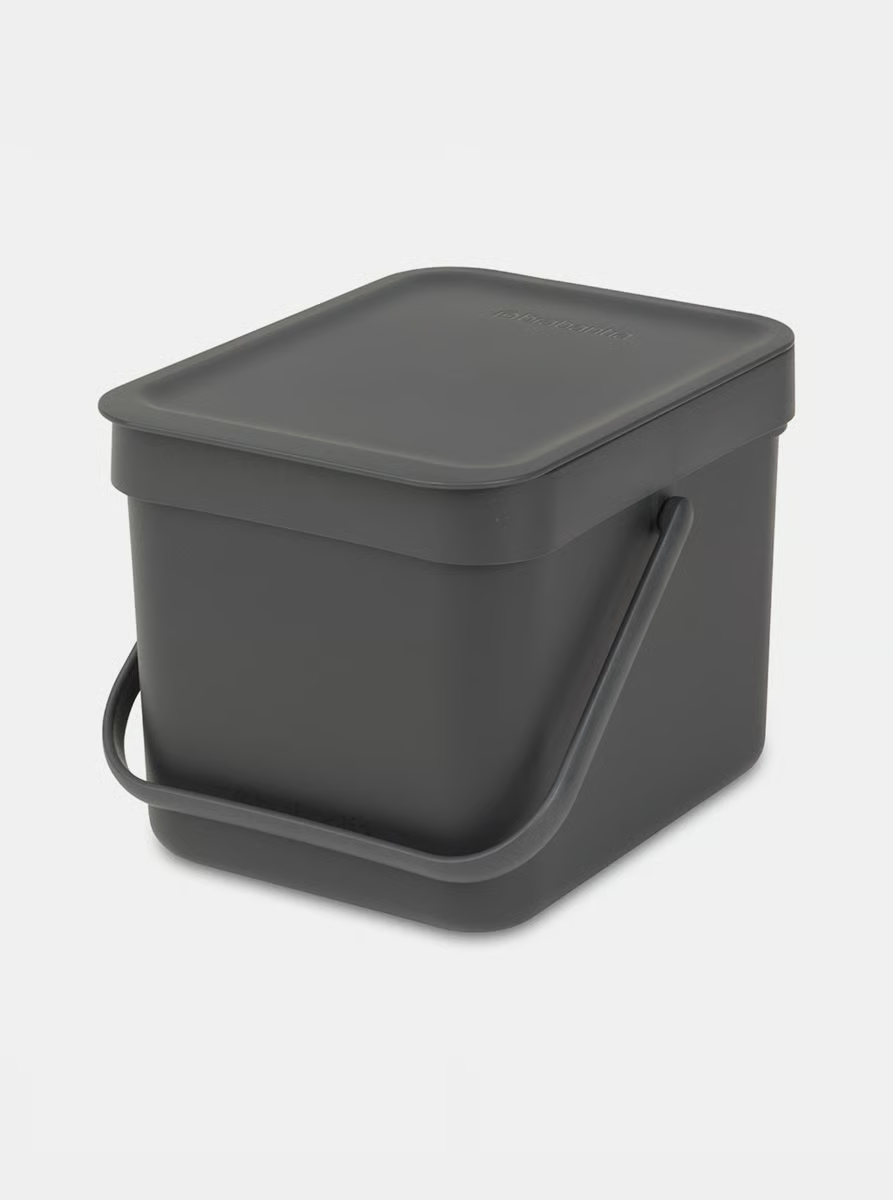
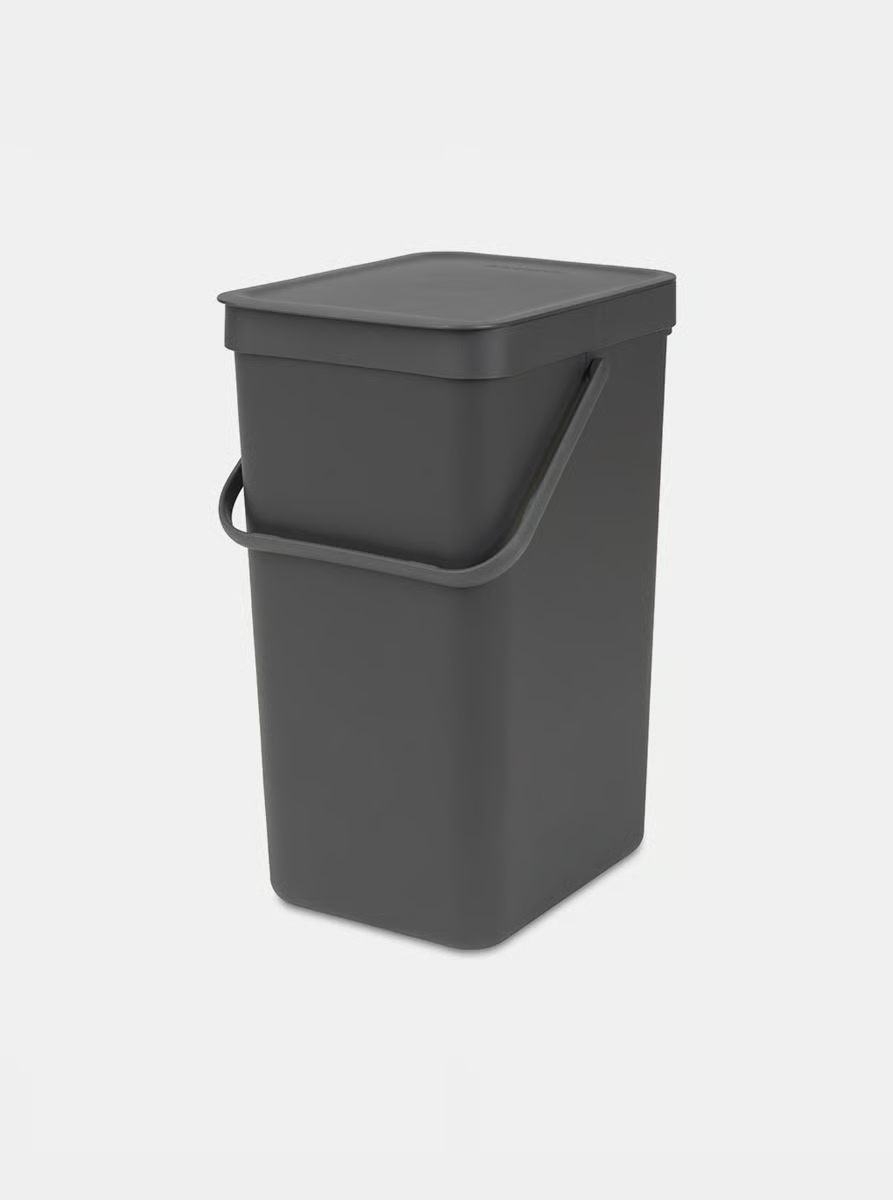
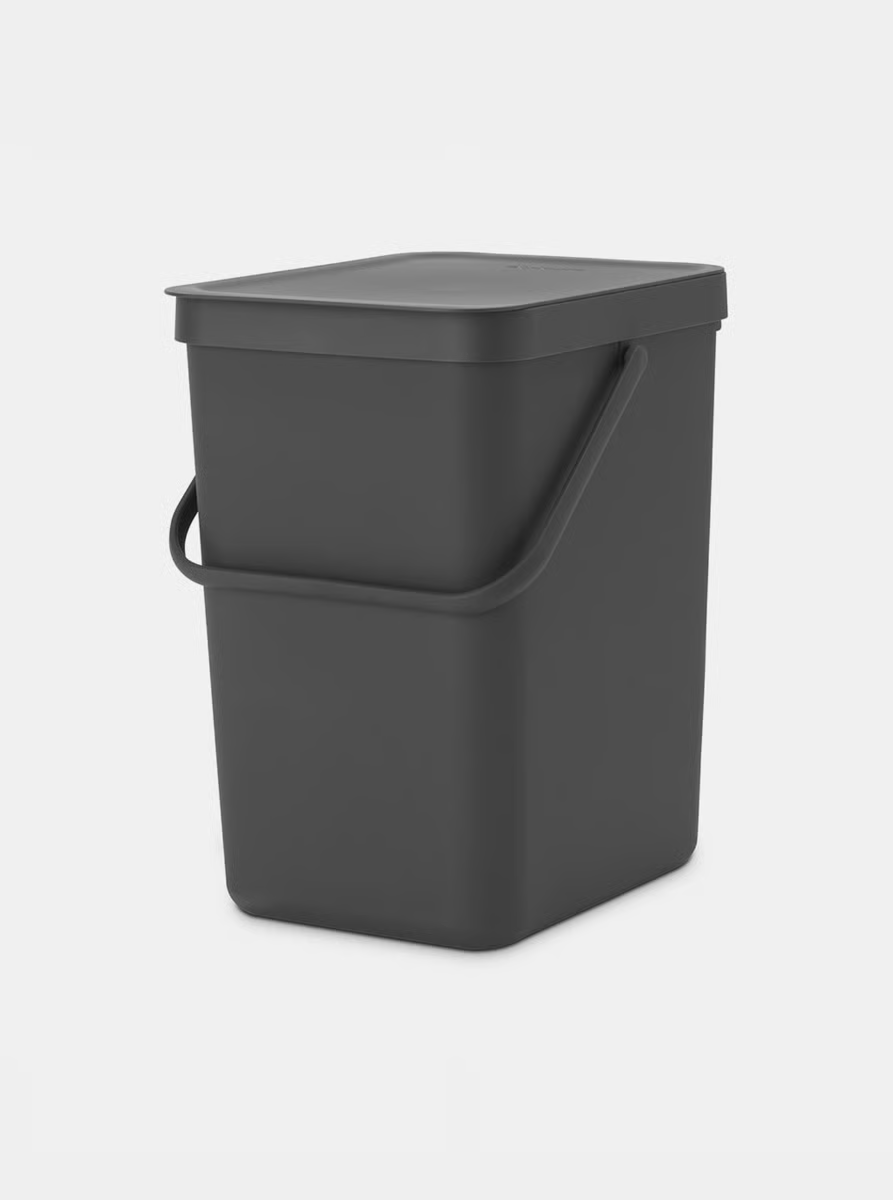
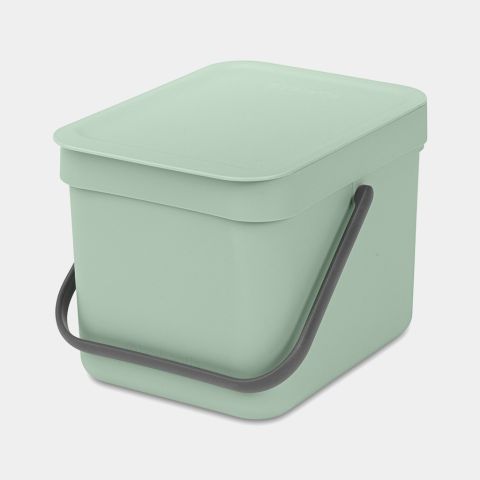
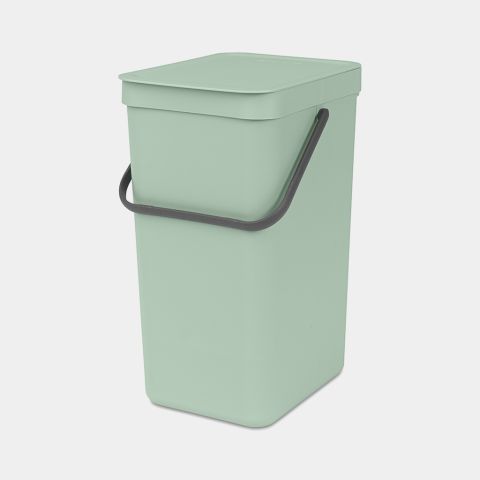
The Brabantia Sort & Go range offers single bins of 12, 16, 25 and 40 litres in grey and jade green. Because each bin is separate, you can mix sizes: a large one for the stream that fills up first and smaller ones for the rest. The 12 and 16 litre bins include a wall bracket; for the 25 and 40 litre bins the bracket is sold separately, and the manufacturer sets hanging load limits of 10 and 15 kg.
Small worktop caddies for food waste
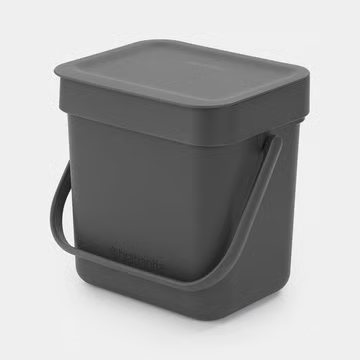
For scraps produced while cooking, a small caddy next to the preparation area is the practical choice. The Brabantia Sort & Go 3 litre caddy has a footprint of 18.8 × 13.9 cm; the 6 litre version comes with a bracket so it can be hung instead of taking up worktop space. A small caddy needs emptying often, and neither model turns scraps into compost on its own.
How to split the litres
There is no single right capacity for every household. A practical way to decide: for one week, notice which stream fills its bag first and how often you empty it. Give the largest bin to that stream and keep the smaller ones for the streams that build up slowly. Litres do not tell you how much weight a full bag can take, or how much a wall bracket can carry.
Common buying mistakes
- Measuring the cupboard from the outside, or relying on its nominal width instead of the clear space between the sides.
- Forgetting the travel needed to pull the system out and the room to open the door.
- Ignoring the trap and pipes under the sink.
- Choosing by total litres without checking how they are split between bins.
- Assuming the wall bracket is included, or that any wall can take the weight.
Quick checklist before you buy
- Location decided: cupboard, floor, wall or worktop.
- Clear width, depth and height measured, with obstacles noted.
- Space in front of the cupboard to pull the system out fully.
- Number of streams and litres per bin.
- Mounting: freestanding, hung or fixed to the cupboard, and whether fittings are included.
- Manufacturer's page for the exact variant: colour, capacity and product code.
Documentary comparison based on each manufacturer's published data. We have not physically tested these bins or their installation in your cupboard, and sorting rules depend on your local council.
Updated:
Sources consulted
- [1] Defra (2025). Simpler recycling: household recycling in England — Department for Environment, Food & Rural Affairs
- [2] Defra (2026). Simpler household recycling rules come into force across England — Department for Environment, Food & Rural Affairs
- [3] Recycle Now. Recycling locator — WRAP
- Brabantia Sort & Go 232527, 2 × 30 L — Brabantia
- HAILO AS Tandem 24/7 3666111 — HAILO
- Brabantia Sort & Go 109805, 12 L — Brabantia
- Brabantia Sort & Go 109966, 16 L — Brabantia
- Brabantia Sort & Go 129940, 25 L — Brabantia
- Brabantia Sort & Go 251047, 40 L — Brabantia
- Brabantia Sort & Go 209888, 3 L — Brabantia
- Brabantia Sort & Go 109720, 6 L — Brabantia